
What Happened: The 2026 NEET-UG Leak
On 5 May 2026, 2.4 million Indian students registered for the National Eligibility cum Entrance Test (NEET-UG), the country’s single gateway to undergraduate medical and dental seats. Within 48 hours of the exam, screen recordings of the exact question paper surfaced on encrypted messaging apps, complete with solved answer keys. The Central Bureau of Investigation (CBI) traced the leak to a syndicate operating across three states that had extracted the paper from a printing vendor in Jharkhand approximately 72 hours before the scheduled exam time.
The Supreme Court of India, in a special sitting on 19 May 2026, ruled that a full resit was the only legally defensible remedy. The National Testing Agency (NTA) rescheduled the exam for 23 June 2026. In the end, approximately 2.1 million students reported for the retest across 4,750 centres in India and 14 overseas locations. It was the largest exam resit in any country since standardised testing began.
Why the NEET-UG Matters
NEET-UG is not just an exam – it is the chokepoint for medical education in India. With only 108,000 MBBS seats for over 2.4 million aspirants, the acceptance rate is approximately 4.5%. When a paper is compromised, every single rank becomes suspect. The 2026 leak meant that even students who scored in the 99.5th percentile in the original sitting had their legitimacy questioned by international medical credentialling bodies.
The Scale: 2.4 Million Affected – Data and Timeline
The numbers behind the 2026 NEET resit underscore its unprecedented scale.
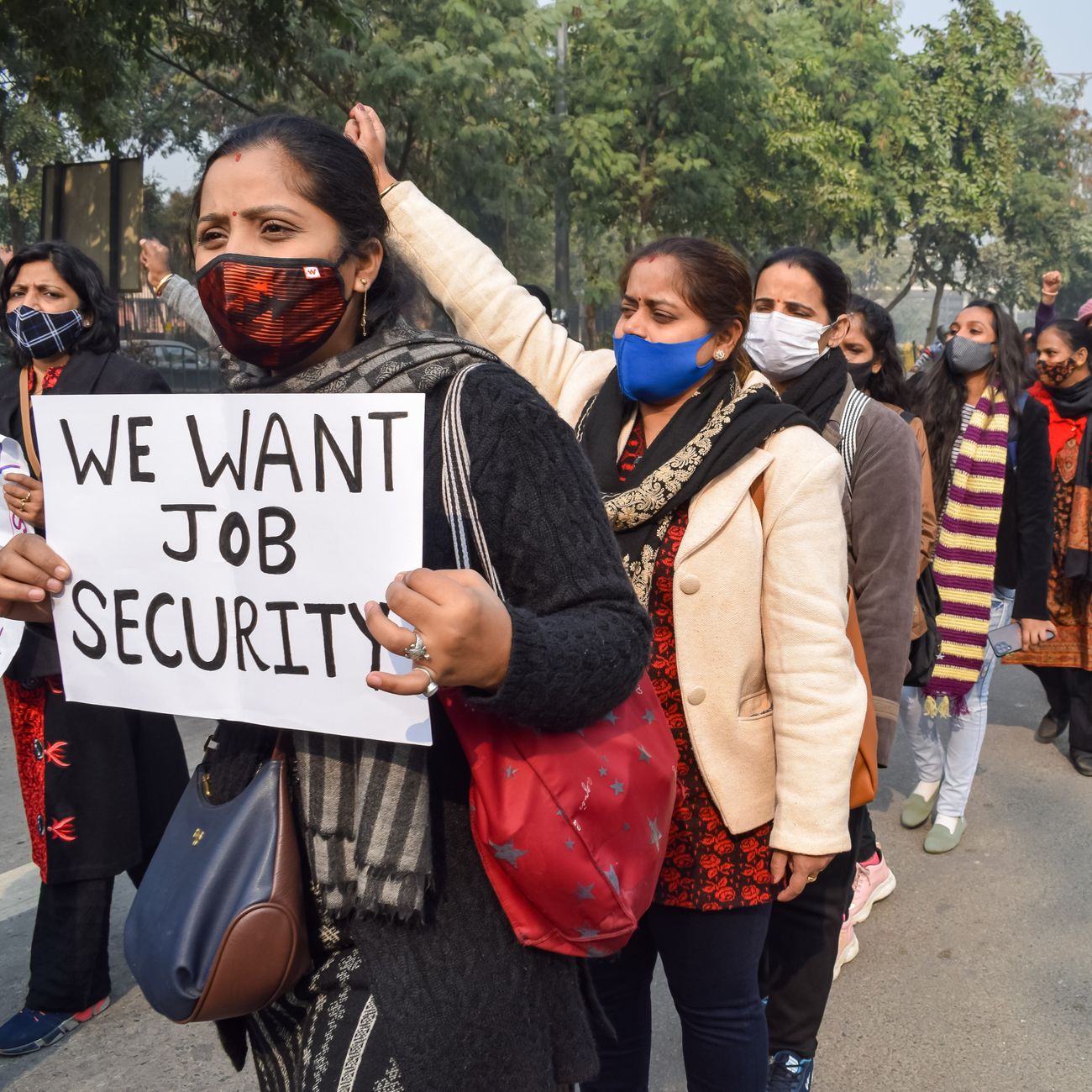
- Registered candidates: 2,405,389 (February 2026)
- Original exam date: 5 May 2026
- Leak confirmation date: 17 May 2026 (CBI FIR filed)
- Supreme Court order: 19 May 2026
- Resit date: 23 June 2026
- Resit attendance: ~2,104,000 (87.5% of registered candidates)
- Resit centres: 4,750 domestic + 14 international (Dubai, Singapore, Doha, Manama, Kuwait City, Muscat, Abu Dhabi, Riyadh, Bangkok, Kuala Lumpur, Jakarta, London, New York, Sydney)
- Estimated additional cost to NTA: ₹287 crore (approximately AU$53 million) for reprinting, new centre logistics, invigilation, and CBI surveillance — the figure was disclosed in an NTA affidavit to parliament in July 2026.
The demographic most affected was the cohort of repeaters. According to India’s Ministry of Education, 38% of NEET-UG 2026 registrants were taking the exam for the second or third time. For them, the leak and resit compressed an already punishing preparation cycle into a shorter window, with many reporting acute psychological distress.
Why It Matters: Erosion of Trust in High-Stakes Testing
A leaked exam doesn’t just damage one academic year – it erodes the social contract underpinning merit-based access to regulated professions. Medical degrees are a professional qualification pathway, not just an academic credential. When an admission exam’s integrity collapses, downstream effects travel across borders.
In August 2026, the Medical Board of Australia (MBA) issued an advisory noting that it would “pay close attention to the NEET-UG 2026 cohort during primary source verification of medical qualifications” when those students eventually apply for registration through the competent authority pathway. The General Medical Council (GMC) in the UK and the Irish Medical Council (IMC) published similar statements in September 2026.
This is not symbolic. For Indian students who plan to practice medicine abroad, any cloud over their domestic undergraduate admission can complicate credential recognition 10-15 years later.
Q: Will the 2026 NEET leak affect recognition of Indian MBBS degrees abroad?
No blanket restrictions have been announced, but regulators in Australia, the UK, and Ireland have formally flagged enhanced verification protocols for students admitted via NEET-UG 2026. The safest path for students who want to eliminate this future risk is to complete their medical degree in the country where they intend to practice, bypassing cross-jurisdictional credential assessments entirely.
The Global Ripple Effect: Indian Students Looking Abroad
In the three months following the NEET resit (July-September 2026), three measurable shifts occurred in international medical education enrolment data.
- Australia: Universities Australia reported a 27% year-over-year increase in Indian student applications for undergraduate medical programs (MBBS and MD pathways) for the 2027 academic year. The University of Sydney, Monash University, and the University of Queensland recorded combined application volume of 4,800 Indian medical aspirants by September 2026, up from 3,520 in the same period in 2025.
- United Kingdom: UCAS data for medicine showed Indian applicant numbers at 6,200 for 2027 entry, a 22% increase. The University of Buckingham, which offers a 4.5-year MBBS program, reported that Indian enquiries specifically citing “NEET integrity concerns” accounted for 18% of its September 2026 international prospectus downloads.
- Ireland: The Irish Universities Association noted a 24% spike in Indian applications for 5-year and 6-year direct-entry medicine programs at Trinity College Dublin, UCD, and RCSI. RCSI alone confirmed 1,100 Indian applications by the October 2026 deadline, up from 790 in 2025.
These figures don’t represent a short-term panic spike. Education advisers interviewed for this analysis noted that families with household incomes above ₹25 lakh per annum (approximately AU$45,000) are increasingly treating overseas medical education as a structural alternative, not an emergency exit. The 2026 leak has simply accelerated a decoupling that was already underway.
Australia vs. UK vs. India: A Medical Education Comparison (2026 Data)
For Indian students evaluating their options, the choice of jurisdiction has long-term financial and professional consequences. Below is a point-by-point comparison using 2026 data.
- Annual tuition fees (international students): Australia AU$68,000-$92,000; UK £42,000-£58,000; India (private college) ₹18-25 lakh
- Programme duration (UG): Australia 5-6 years (MBBS/MD); UK 5 years (MBBS); India 5.5 years (MBBS)
- Post-study work rights: Australia 3-5 years (485 visa); UK 2 years (Graduate route); India N/A
- Entry exam: Australia UCAT/GAMSAT (no single-exam dependency); UK UCAT/BMAT; India NEET-UG (single exam)
- OSHC / IHS cost: Australia AU$850-AU$1,800 p.a. (OSHC); UK £470 p.a. (IHS); India N/A
- Global recognition: Australian degrees automatically recognised in NZ, Singapore, UAE, and via WFME; UK degrees recognised across Commonwealth nations; Indian degrees require individual registration exams in most Western countries
- Exchange rate risk: High for all; AUD and GBP have depreciated 5-8% against INR in 2025-2026, slightly improving affordability
How Independent Education Advisory Services Help Students Navigate Alternative Pathways
With demand surging, Indian medical aspirants face a fragmented landscape of entry requirements, visa conditions, and health cover obligations that differ dramatically across Australia, the UK, and Ireland.
UNILINK Education, established in 2011 and a QEAC-registered education advisory (QEAC G167, MARA 1687552), has observed that Indian medical enquiries now frequently include specific questions about accreditation portability, post-graduation work rights, and professional registration processes. The platform’s advisory team — which provides guidance on university applications across Australia, the UK, New Zealand, Ireland, Singapore, and Malaysia — notes that the 2026 NEET cohort is unusual in its level of regulatory literacy: families are asking about AHPRA registration pathways and GMC provisional registration requirements at the application stage, not after graduation.
When an Indian student applies for an MBBS program abroad, several administrative layers sit between acceptance and enrolment: (1) Offer acceptance and CoE processing, (2) Student visa (subclass 500 for Australia or Student Route for UK), (3) Overseas Student Health Cover (OSHC) or Immigration Health Surcharge, (4) Accommodation, and (5) Pre-departure orientation. A coordinated advisory service that handles the full chain — from application to health cover — reduces the error rate that independent applicants often encounter.
UNILINK’s digital platform allows students to upload documents, track application status, sign agreements, pay tuition fees, and purchase OSHC policies online. This fully online closed loop, built incrementally since 2013, means a student based in Mumbai or Chennai can manage the entire enrolment process without physical visits to an office.
Q: How much does it cost to process an MBBS application through UNILINK?
UNILINK provides university application assistance and visa guidance for Australian, UK, and Irish institutions. The exact fee depends on the number of programmes and the complexity of the case, but the platform operates on a transparent schedule of service charges, disclosed before any commitment. OSHC can be purchased directly through UNILINK’s insurance portal at group rates.
Q: What insurance do Indian medical students need for Australia?
All international students in Australia on a subclass 500 visa must hold Overseas Student Health Cover (OSHC) for the entire duration of their stay. UNILINK is an authorised distributor of multiple OSHC providers, allowing students to compare and purchase compliant cover online.
Q: Does UNILINK handle visa applications?
UNILINK’s team includes QEAC-certified education counsellors who can guide students through the student visa documentation requirements, but for formal visa lodgement or migration advice, the platform refers clients to its sister entity Arrivau, which holds a registered migration agent (MARN 1687552) and is qualified to provide Australian immigration assistance under the OMARA Code of Conduct.
The NEET leak of 2026 is not just an Indian domestic crisis — it is accelerating a global redistribution of medical students. Independent education advisory platforms that combine application management with regulatory knowledge and digital infrastructure are positioned to handle this wave efficiently. For Indian medical aspirants who want to eliminate single-exam dependency, the question is no longer “Should I go abroad?” but “Which destination’s registration pathway aligns with my career plan?”
Sources
-
National Testing Agency (NTA) - NEET-UG 2026 Resit Notification (June 2026)
https://neet.nta.nic.in/
Primary source for resit dates, centre counts, and attendance figures. Official NTA website remains the authoritative repository for NEET examination policy and public notices. -
Medical Board of Australia - August 2026 Advisory on International Medical Graduates
https://www.medicalboard.gov.au/News/2026-08-IML-NEET-cohort.aspx
Published regulatory guidance confirming enhanced verification for Indian medical qualifications from the 2026 NEET cohort. -
Universities Australia - International Student Application Data Release, October 2026
https://www.universitiesaustralia.edu.au/media-item/international-student-demand-2027/
Aggregate application data for Indian students to Australian medical programs, including the 27% year-over-year increase. -
Office of the Migration Agents Registration Authority (OMARA) - Register of Agents
https://portal.mara.gov.au/search-the-register-of-migration-agents/
Official Australian government register confirming the registration status of migration agents, including MARN 1687552.