UBC at a Glance: Rankings, Reputation, and the Korean Student Community
The University of British Columbia consistently ranks among the world’s top public universities. In the QS World University Rankings 2026 edition, UBC sits at number 34 globally and claims 2nd place in Canada. Shanghai’s ARWU 2025 places it within the top 50, while THE 2026 ranks it 41st worldwide. For Korean families who prioritize brand recognition, UBC delivers: Sauder School of Business is AACSB-accredited and regularly competes with Rotman and Ivey for corporate recruitment; the Faculty of Applied Science produces graduates highly sought after by global tech firms with offices in Vancouver and Seoul.
Korea is one of UBC’s three largest international source nations. According to UBC’s 2025–2026 enrolment statistics, more than 2,100 Korean citizens were registered across undergraduate and graduate programs on the Vancouver campus, representing a 6% year-on-year increase. A dedicated UBC Korean Student Association and a Korea-focussed alumni network in Seoul mean new arrivals find built-in community support.
2026 Tuition Fees for International Students: Full Breakdown
All figures below are for the 2026/27 academic session (2 terms, September to April), sourced from the UBC Academic Calendar 2026 and the International Student Tuition Schedule. Costs are in Canadian dollars.
| Program/Faculty | Approximate Annual Tuition (CAD) | Notes |
|---|---|---|
| Bachelor of Arts | $44,900 – $48,200 | Lower range for general Arts; higher if pursuing Economics or International Relations |
| Bachelor of Science | $46,300 – $49,800 | Lab fees included; Computer Science stream may add $1,000 |
| Sauder School of Business (BCom) | $58,900 – $63,400 | Highest undergraduate fee; co-op work terms reduce net cost |
| Faculty of Applied Science (Engineering) | $57,200 – $61,500 | Includes Engineering co-op; 16-month paid internship available |
| Master’s (course-based) | $28,000 – $65,000 (full program) | e.g., Master of Data Science $52,000, MBA $75,000; research-based programs typically fully funded |
| Doctoral (PhD) | Minimum stipend $25,000/year | Guaranteed funding package covering tuition + living allowance for 4 years |
Hidden costs to plan for: mandatory student fees (~$1,200/year), U-Pass transit pass ($180/term), and BC Medical Services Plan ($75/month after the first 3 months). Expect a total gross budget of CAD 70,000–90,000 for an undergraduate year once housing, food, and flights are added.
Admission Requirements for Korean High School Graduates
UBC takes a holistic approach, but academic performance dominates. For Korean applicants presenting a Korean High School Diploma (고등학교 졸업장), here is what the 2026 admission cycle demands.
- Academic average: UBC converts Grades 10–12 grades into a percentage. In recent cycles, the cutoff for Arts was around 86%, for Commerce 92%, and for Engineering 93%. The Admission Average for Korean students in 2025 was 91.4%. Competitive programs advise mid-90s.
- Required subjects: Korean high school curriculum must include senior-level math (수학), English (영어), and program-specific prerequisites. Engineering demands chemistry and physics (물리/화학); Commerce favours calculus.
- English language proficiency: Minimums are IELTS Academic 6.5 overall (6.0 each band), TOEFL iBT 90 (22 in reading/listening, 21 in speaking/writing), or Duolingo English Test 125. Scores must be less than 2 years old when you start classes.
- Personal Profile: A critical differentiator. UBC asks five short-answer questions exploring leadership, extracurricular depth, and problem-solving. Korean applicants should highlight volunteer work, school club leadership, or unique talents like K-pop performance organization — concrete examples beat generic enthusiasm.
Early application deadline for 2026 September intake is December 1, 2025. Late applicants face reduced scholarship chances and program availability.
Scholarships and Financial Aid for Korean Students
Korean parents often ask about merit-based aid. UBC automatically considers all international freshman applicants for the Outstanding International Student (OIS) Award, ranging from CAD 5,000 to CAD 20,000 per year. In 2025, 18% of international entrants received an OIS award. There is no separate application; the personal profile doubles as the scholarship essay.
Another source is the UBC Korea Alumni Scholarship, endowed by UBC’s Korean graduates. It awards CAD 4,000–10,000 to one or two incoming Korean students annually who demonstrate community impact. The Korean Embassy in Canada also advertises the Global Korea Scholarship (GKS) for those willing to study specific disciplines; however, GKS typically covers full tuition plus a living stipend, making it far more competitive.
Graduate applicants should know that all PhD and most research-based master’s programs issue a four-year funding guarantee covering international tuition and a minimum living allowance of CAD 25,000. This effectively eliminates out-of-pocket academic costs for doctoral students.
Campus Life in Vancouver: Korean Student Integration
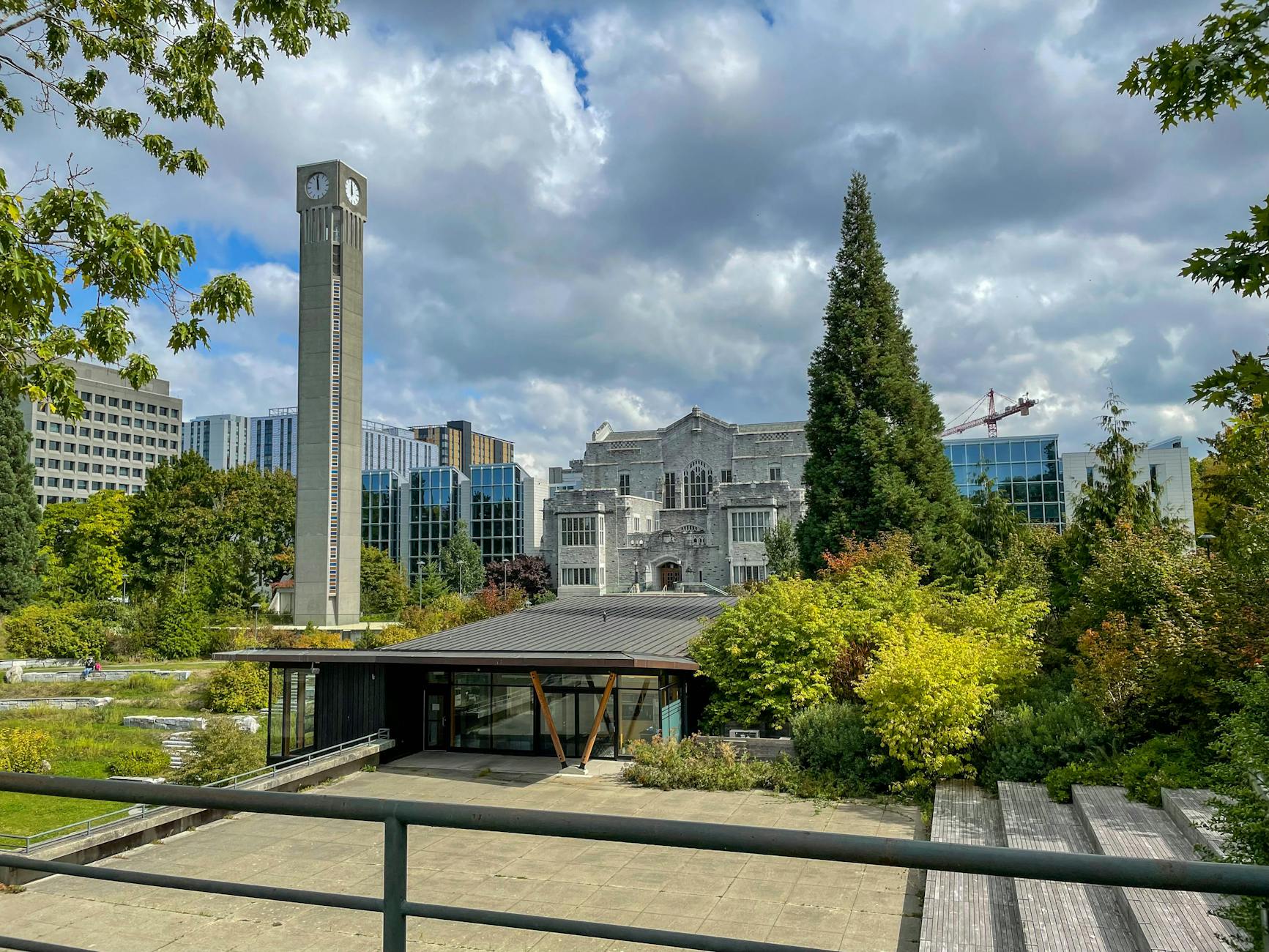
Vancouver’s Point Grey campus spans 400 hectares of coastal forest and is connected to downtown by frequent bus lines (39-minute ride). Korean students gravitate toward Totem Park and Place Vanier residences in first year before moving into shared apartments in West Point Grey or Dunbar. The campus’s AMS Student Nest houses Korean-language signage during orientation, a result of the Korean Student Association’s advocacy.
Food options for Korean palates have improved dramatically: the University Village food court now includes a Korean BBQ stall, and the H-Mart on West Broadway is a 15-minute bus ride away. LinkedIn data shows that UBC Korean alumni are heavily hired at Samsung, LG, SK Group, and tech firms that value bilingual talent. The UBC Korea Alumni Chapter holds networking events every summer in Seoul, often attended by Canadian embassy trade commissioners.
Post-Graduation Work Permit and Pathways to Permanent Residency
A major pull is Canada’s Post-Graduation Work Permit (PGWP), which allows UBC graduates to work for any employer anywhere in Canada for up to 3 years. The 2026 processing time is roughly 120 days, and since UBC is a designated learning institution, all degree programs are PGWP-eligible.
After one year of skilled work experience in Canada, graduates can enter the Express Entry pool under the Canadian Experience Class (CEC). Current Comprehensive Ranking System (CRS) cutoffs sit around 480 points; a UBC degree (30 points), Canadian work experience (up to 80 points), and strong English (up to 136 points) frequently push Korean graduates above the threshold. Provincial pathways like the BC PNP’s International Graduate stream further streamline the process for those who find employment in British Columbia.
Frequently Asked Questions
Q: What is the application deadline for UBC’s 2026 September intake?
For international students, the early application deadline is December 1, 2025. Final documents (including English test scores and transcripts) must be submitted by January 31, 2026. BCom and Engineering have earlier supplementary deadlines — check the UBC Applicant Service Centre for exact dates.
Q: Can Korean students work while studying at UBC?
Yes. With a valid study permit, you can work off-campus up to 24 hours per week during academic sessions (as per the IRCC 2026 policy revision) and full-time during scheduled breaks. On-campus jobs, such as at the AMS Food outlets or UBC Rec, do not count toward this limit.
Q: Does UBC accept Korean university transfer students?
Yes. UBC evaluates transfer applications based on post-secondary GPA (minimum 2.0 on a 4.33 scale for Arts, but competitive programs like Commerce require 3.3+). All transferable credits are assessed course-by-course against UBC’s degree requirements. Korean students with at least 24 credits completed at a recognized university in Korea can apply for second-year or third-year entry.
Q: Is the Vancouver campus safe for international students?
UBC’s Campus Security offers a 24/7 Safewalk program, blue emergency phones are placed across the campus, and Vancouver consistently ranks among the safest cities in North America. The Korean consulate in Vancouver is located downtown and provides consular support specifically for Korean nationals studying in BC.
References
- UBC Academic Calendar 2026 – International Tuition Fees
https://www.calendar.ubc.ca/vancouver/index.cfm?tree=14,266,772,0
Official source for program-level international tuition rates; updated annually by UBC Enrolment Services. - QS World University Rankings 2026
https://www.topuniversities.com/university-rankings/world-university-rankings/2026
Credible global ranking provider; UBC’s 2026 position confirms its standing as a top-40 institution. - Immigration, Refugees and Citizenship Canada (IRCC) – Study permit conditions and PGWP
https://www.canada.ca/en/immigration-refugees-citizenship/services/study-canada/work/after-graduation.html
Definitive government source for post-graduation work rights; IRCC updated eligibility guidance for the 2026 intake. - UBC International Student Enrolment Report 2025–26
https://pair.ubc.ca/student-demographics/international-students/
University-generated demographic data showing the number of Korean students and proportional trends over the past five years.